Best PvE Servers With No PvP
How to find a true PvE Minecraft server with PvP fully disabled — what "no PvP" really means, the protections to confirm, and where to see the live picks.
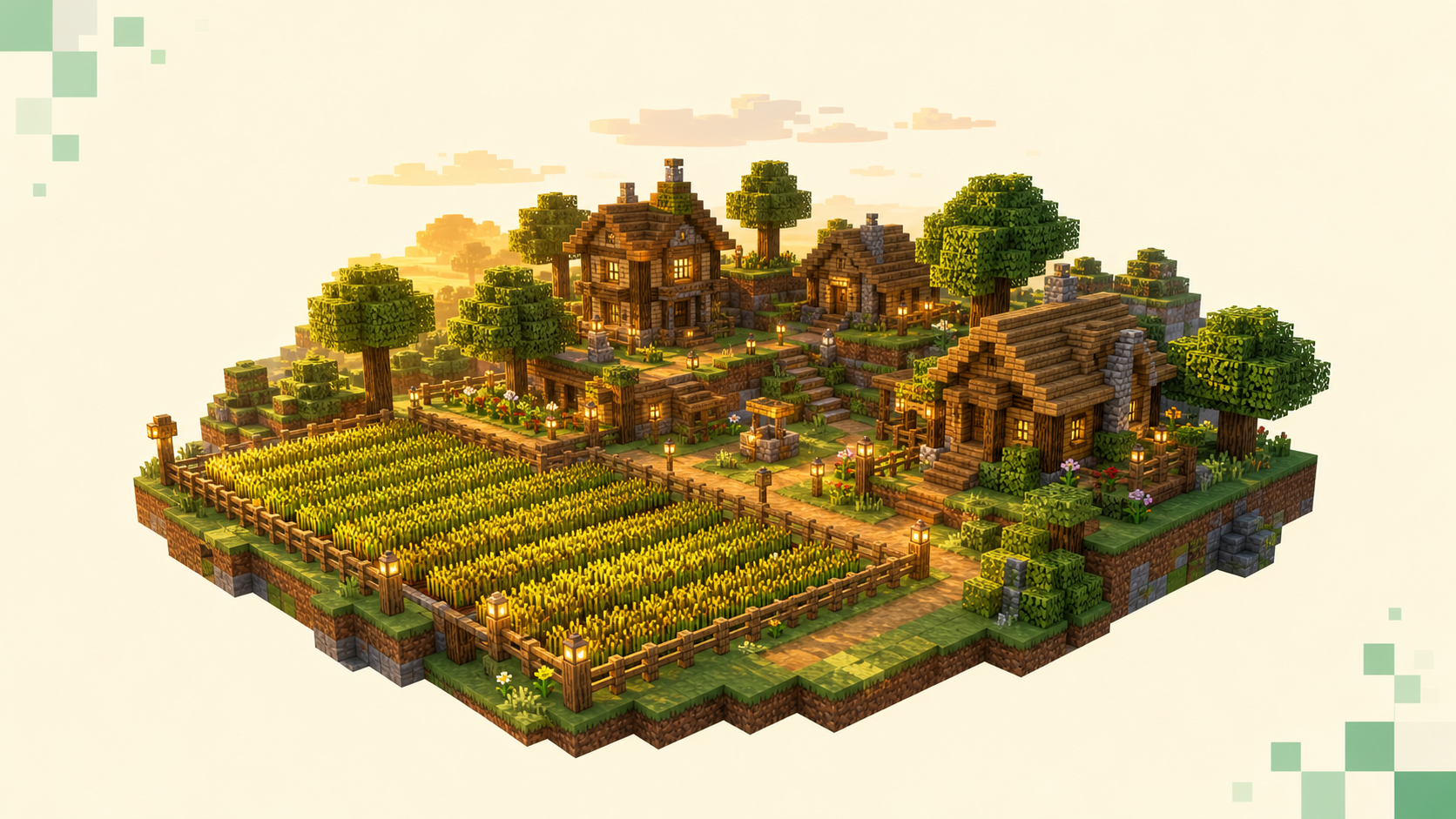
A true PvE server is one where player-versus-player combat is switched off across the whole server, so nobody can gank you — you build, farm, and explore against the environment instead of fighting other people for your gear. PvE just means Player vs Environment: the mobs, the terrain, the survival side of the game, as opposed to PvP, which is Player vs Player. If you want the cooperative version of survival without the risk of a stranger killing you at spawn, that's the setting you're looking for. I'm not going to hand you a fixed list of named servers, because which PvE worlds are active and well-run changes month to month — the live survival rankings already show what's busy right now, and that's a better starting point than a list someone froze a year ago. What's worth your time is knowing how to confirm PvP is genuinely off, plus the other things — claims, moderation, uptime, shared projects — that make a no-PvP world worth settling into.
What a "no PvP" server actually means
PvP on a server is just a switch the owner controls. They can disable player-versus-player combat for everyone, which means swords and bows do no damage to other players — you can swing all you like and nothing happens. That's different from the opt-in PvP or PvP-zone setups a lot of survival servers run, where combat is on in certain areas or only between players who flag for it. A true PvE server keeps it off everywhere, all the time.
For a beginner that's the whole appeal. Nobody jumps you at spawn, nobody empties your inventory while you're loading in, and you're not pulled into fights you never picked. It's co-op survival at whatever pace suits the people around you. The one catch is that "PvP off" in the simplest possible setup doesn't automatically mean other players can never hurt you, which is the part worth understanding before you commit.
Why "PvP off" isn't always the whole story
In a vanilla setup, the relevant line in server.properties is pvp=false, and all that flag does is disable direct player-to-player combat damage — melee hits and arrows. It's narrower than it sounds. With pvp=false still set, other players can often hurt you through indirect routes: a splash potion of harming, lava poured over your head, TNT and other explosions, fire, or a mob trap built to funnel something dangerous at you. The sword stops working, but those indirect routes don't all close by themselves.
A genuinely run PvE server plugs those gaps. Owners use plugins or gamerules to block the indirect stuff too — splash-potion damage between players, player-placed hazards, that kind of thing — so "no PvP" means no player can hurt you by any route, not just that they can't stab you. The takeaway is to not take a "PvE" label at face value. Look for a server whose rules describe a fully protected, harassment-free world, and if the listing is vague about the indirect side, ask in their Discord before you build anything you'd be sad to lose.
No PvP still doesn't mean no griefing
Turning off combat solves one problem and leaves another one untouched. PvP being disabled stops players from attacking each other, but it does nothing to stop someone breaking your build or emptying your chests while you're offline. That's griefing, and it's a separate thing from combat entirely — a peaceful no-PvP server with no protection is still wide open to it.
The fix is land claims. You mark out the area around your base so untrusted players can't break blocks, place blocks, or open containers inside it, and you add your friends to a trust list so you can still build together. The other layer worth having is block logging, or rollback — good servers record every placement, break, and chest access, so if something does slip through, an admin can undo one specific player's damage in seconds instead of restoring the whole map. If you want the deeper version of this, the rundown on a claim-protected survival world covers the anti-grief layers in more detail. For a PvE server you really want both: PvP off and claims on.
Friendly community and active moderation
A PvE server lives or dies on its community tone more than most. Without combat as the draw, what you're signing up for is the people — and you want regulars who help newcomers find their feet, not a dead spawn or a hostile one. The signs are easy enough to read once you know to look: an active staff team, a Discord where reports actually get answered, and posted rules that spell out PvP is off and harassment isn't tolerated.
Moderation still matters even with combat disabled, which surprises some people. Scams and griefing attempts don't stop just because nobody can swing a sword, and responsive admins are what keep the place friendly. The upside is that PvE servers tend to attract builders and explorers rather than competitive players, so the baseline tone is usually relaxed and a bit more welcoming to someone just starting out.
Stable uptime and a population that fits
Every listing here shows uptime, and it's worth treating as a real signal. A server that vanishes for days at a time loses its regulars, and on a world where you're investing weeks into builds, downtime history is a warning sign, not a footnote. Read the population realistically too. A steady small-to-mid community is the sweet spot for co-op survival — not a ghost town where there's nobody to build with, and not a two-thousand-player crowd of strangers where you're just another name in chat.
Monthly vote totals are a useful read on genuine activity, because a real community logs in to vote and that's harder to fake than a raw player counter that might be padded. And check the live count at the hours you'll actually play. A server can look busy in its home timezone and sit empty when you're on, so log in around your usual evening before you decide it's the one.
Shared projects keep a PvE server social
With PvP gone as the thing that pulls people together, the social glue of a PvE server is cooperation — community towns, shared farms, group builds, player-run markets. The servers that stay lively are usually the ones that lean into that, with spawn towns, build contests, or just a culture of helping new players get established instead of leaving them to fend for themselves.
SMP-style listings often fit this best, because they're built around lasting communities rather than constant churn, so they're worth a look alongside straight survival — the SMP rankings read the same way as the survival ones. And if you'd rather build quietly on your own, that's fine too. A no-PvP world suits soloists just as well as groups, and the guide to solo-friendly survival points you at servers that work when you mostly want a peaceful place to build alone.
A quick checklist for a true no-PvP server
Run any candidate through this before you settle in.
- PvP is confirmed off in the rules or listing — and ideally the indirect-damage loopholes (potions, explosions, hazards) are closed too, not just the basic vanilla flag.
- Land claims or protected regions get a mention, so "no PvP" also means "no grief" and your build survives while you're offline.
- There's an active staff team and a Discord where reports actually get answered.
- Uptime looks healthy and the live population fits the size of group you want — busy enough to be social, not so busy you're lost in it.
- Edition and version match you and your friends. Java's default port is 25565 and Bedrock's is 19132, and the two editions don't connect to each other by default, so confirm everyone's on the same one.
How to use the live rankings to find your server
The board works on one rule: servers are ordered by the votes they earn during the current calendar month, and the count resets when the month flips, so the list reflects what's active now rather than what was popular ages ago. The full explainer on rankings goes deeper if you want it, but that's the gist.
Start at the survival rankings, read each listing for PvP status, claims, population, and uptime, and pull out two or three that look right. Then test before committing — hop in, confirm PvP is actually off by trying to hit a friend and watching for no damage, check your ping, and feel out how the moderation handles itself. If you need to narrow further you can filter by version, with dotted paths like /servers/version/26.2, or by country to keep everyone's ping low. The full server list and the homepage rankings are the always-current source, so lean on those over any fixed list of names — including this one.
FAQ
Do mobs still attack me if PvP is off?
Yes. The PvP flag only governs damage between players, so zombies, creepers, skeletons, and the rest still spawn and come after you exactly as they would anywhere. That's the "environment" half of PvE — the threat is meant to be the world, not other people. If you want a world with no hostile mobs at all, that's a separate setting (peaceful difficulty), and it's not what most PvE servers run, since the survival challenge is usually the point. Check the listing if you specifically want one or the other.
Can I disable PvP just for my own character?
On a true PvE server there's nothing to disable — it's already off for everyone server-wide, and that's not something an individual player toggles. The question usually comes up on a regular survival server where combat is on and you'd rather opt out. You generally can't do that on your own there; it depends on whether the server runs a plugin with safe zones or a personal PvP toggle. If avoiding combat entirely is the goal, you're better off starting on a server that's PvE from the ground up than trying to carve out an exception on a PvP one.
Could an owner turn PvP back on later?
They could — it's a server setting, so an owner can flip it whenever they want, and some otherwise-peaceful servers open temporary PvP zones or event arenas you choose to enter. That's worth knowing so a change doesn't catch you off guard. A server that takes its PvE identity seriously will say so plainly in its rules and won't quietly switch combat on across the whole map. If the rules are vague about it, that's a fair thing to ask about in their Discord before you sink time into a base.