Best Origins SMP Servers: How to Choose
Best Origins SMP servers hinge on one question: mod or datapack, then balance enforcement, grief protection, and live population. How to read the rankings.
The best Origins SMP server is the one whose install cost you're actually willing to pay: if it runs the Origins Fabric mod, you install Fabric Loader, the Fabric API, and the exact matching Origins build before you can connect at all, while a datapack version of Origins lets you in with nothing on your end. So the first thing to read on any listing is whether it's a mod server or a datapack server — that single fact decides your setup — and after that you're judging two things the live rankings help with: how the owner keeps lopsided origins from wrecking balance, and whether enough people are online to make an SMP worth joining.
If the SMP format itself is new to you, what an SMP is covers the basics so this post can stay on the narrow question of picking an Origins one. I won't name servers, because the answer changes month to month; the SMP rankings are where you actually pick, and everything below is how to read them. Earth SMPs are another variant worth knowing, where the map is a scaled Earth and the politics are the point.
What Origins actually is, and why it's an SMP flavor, not a server
Origins layers a species pick on top of a normal survival multiplayer world — you choose one race with powers and drawbacks on your first join and live with the consequences. When you connect, an origin-selection screen locks you in place until you commit: you scroll through the choices with the arrow buttons and confirm the one you want, and only then do you spawn.
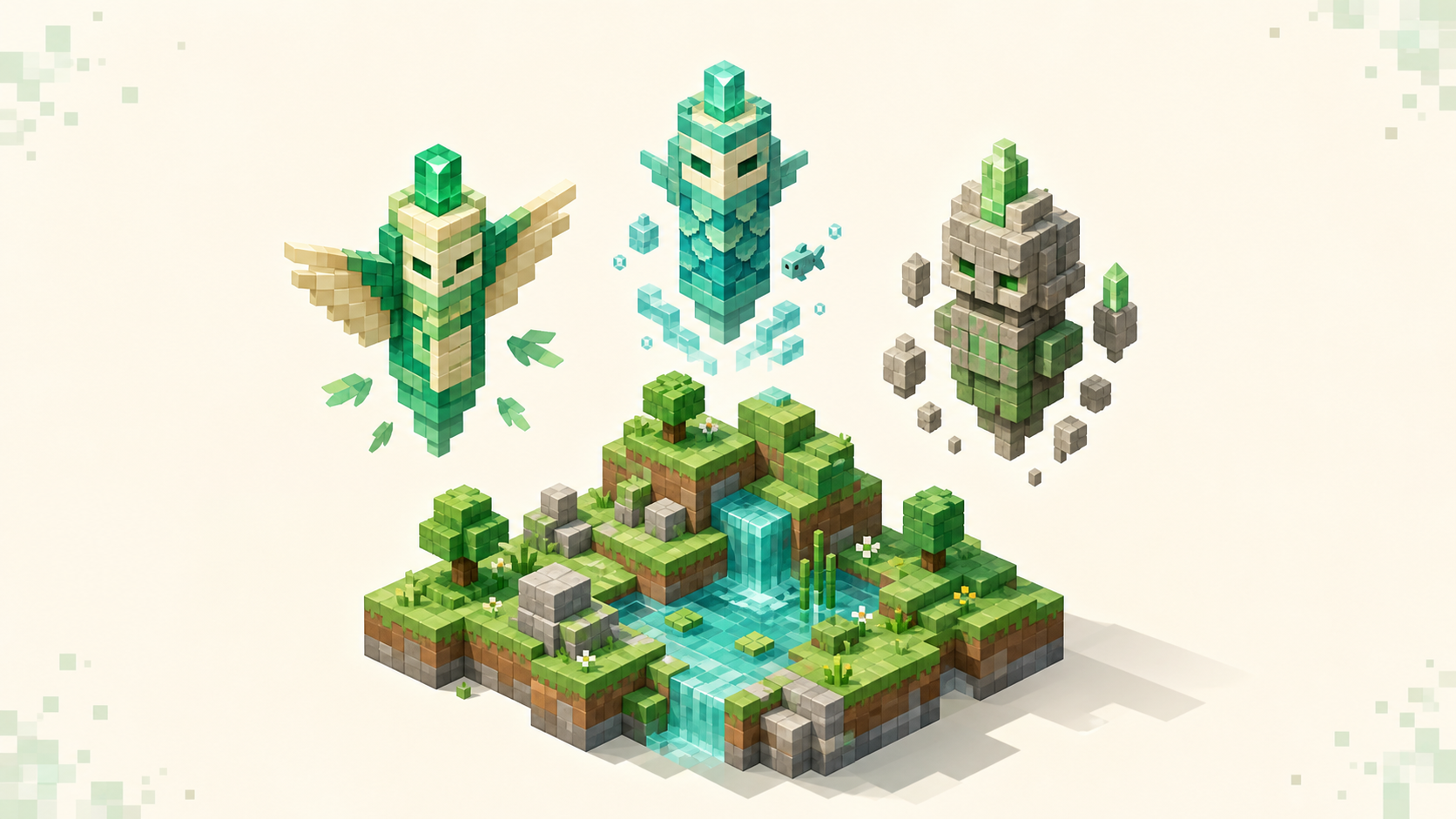
The choices are deliberately lopsided against each other. Enderian teleports by throwing an ender pearl but takes damage in water and rain. Merling breathes underwater and swims fast, then dries out and takes damage the longer it's on land. Blazeborn is immune to fire and lava but hurt by water. Elytrian gets a permanent natural elytra glide and can never wear a chestplate. Phantom can phase intangible and fly but burns in daylight. Arachnid climbs walls and spiders leave it alone, at the cost of fewer hearts. The mod (by Apace100, Fabric-first) tags each origin with an "impact" rating on a 0–3 scale that weighs the good against the bad, meant to keep them roughly even. In practice some land stronger than their number suggests, which is the whole reason the balance section below matters.
The one question that changes your setup: mod or datapack
Everything about your setup hinges on how the server runs Origins, and there are two paths.
The mod path is the real Origins by Apace100. To connect you install Fabric Loader, the Fabric API, and the Origins mod on your client, all matching the server's version — and matching every add-on the server layers on top, because those are separate mods too. The server runs the identical set. Get one piece wrong and you're kicked at the door with a missing-mods or version disconnect; fixing missing mods when joining a modded server walks through reconciling that list. If you're deciding between loaders or reading a server's requirements, Forge vs Fabric for a server is worth a look, since Origins is Fabric-first with a Forge/NeoForge port that some servers use instead. One practical catch: Fabric mod servers usually sit a version behind vanilla because the whole mod chain has to update first, so don't expect a mod Origins server on the newest line.
The datapack path is Origins recreated through the game's own datapack system, and it runs server-side only. You install nothing — you just connect on the matching game version, and a mismatch there shows the plain "Outdated client!" or "Outdated server!" screen instead of a mods error. These servers frequently pair the datapack with a resource pack pushed on join for the origin textures, applied automatically the moment you connect; what a server resource pack is explains that prompt if you've never seen it. The honest ceiling: a datapack can't reproduce every client-side ability the mod injects, so datapack servers usually run fewer, simpler origins. If you want to understand how the owner set it up, how to add a datapack to a server shows the server side.
Spotting which one a listing is takes two seconds: Fabric or Forge in the software tag means mod, install required; Vanilla or Paper means datapack, nothing to install. Read that tag before anything else.
Balance enforcement: the thing that separates a good Origins server
Origins is asymmetric on purpose, so a good owner actively manages it rather than shipping the defaults and walking away. Check these in the posted rules or the server's Discord before you join.
- A banned or enabled-origin list. On PvP-leaning servers, Elytrian (free flight), Enderian (free pearl teleport), and Phantom (phasing and invisibility) commonly get banned outright or heavily nerfed. A PvP server with no published origin list is a red flag — it means nobody has thought about the fight.
- The reroll policy. The Orb of Origin is the item that reopens the selection screen, and whether it's craftable, admin-only, or a one-time thing changes the whole game. Free swapping lets people cheese the best origin for each situation — Merling to cross an ocean, then Elytrian for a raid.
- Config nerfs and add-ons. Owners layer cooldown tweaks or run add-ons like Origins: Classes or Extra Origins. Remember every add-on on a mod server is another mod you personally have to install to match, so a big add-on list means a longer setup.
- Anti-cheat reality. Flight-and-phase origins make anti-cheat genuinely hard, and Fabric-side anti-cheat is thinner than Paper's — Grim and Vulcan are Paper-world tools, and there's no clean equivalent on a Fabric mod server. So mod Origins SMPs lean harder on a whitelist and staff who are actually online watching, rather than software catching a cheating Phantom for them.
Activity, grief protection, and the SMP basics that still apply
Underneath the powers it's a survival SMP, so the ordinary checks hold, just weighted for what origins can do. Population comes first: an empty Origins server has nobody to build or fight beside, and the monthly vote count on each listing is the freshness proxy for that — how to tell if a server is dead covers the tells beyond the raw number. Grief protection matters more than usual here, because wall-climbing and phasing make raiding a claimed base easier than it would be in vanilla, so look for land claims or rollback; what griefing is and how servers stop it explains the systems to expect. Check for a whitelist or application gate, which is common on mod Origins servers for the anti-cheat reason above. And read the PvP stance, because it's a per-server toggle and a cooperative-exploration Origins world plays nothing like a PvP Origins one.
Version, ping, and edition before you commit
A few practical constraints settle the shortlist. Origins is Java-only — Fabric or Forge — with no true Bedrock equivalent, so this whole niche lives on Java's default port 25565, not Bedrock's 19132. Match versions carefully: Paper servers stick to whichever version Paper marks as stable, which can trail the newest vanilla release for a while after a drop, and Fabric mod servers may trail even further behind, so browse by a dotted version path like /servers/version/26.1 to line your client up. Favor a host near you and narrow by region with an example path like /servers/country/us, swapping in your own country code.
Picking one from the live rankings
Compressed, the filter runs in order: settle mod or datapack from the software tag, check that balance is actually enforced, confirm the population is live, look for claims and a whitelist, then match version and ping. With that in hand, push to the live data — the SMP rankings are ordered by votes earned this calendar month, and the count resets when the month flips, so the top entries are the servers active right now rather than whatever was big two years ago; how server rankings work explains the vote mechanic if you want the detail. Shortlist two or three, confirm mod versus datapack for each, do any Fabric install before prime time so you're not troubleshooting a mods list while your friends wait, and join for ten minutes to feel out population and lag. If strict Origins SMPs are thin in a given month, widen the net to the broader survival list and filter from there.
FAQ
How do I change my origin after I've already picked one?
Through the Orb of Origin — that item reopens the selection screen so you can swap species. Admins can also force it with /origin gui <player> to reopen the picker, or set an origin directly with /origin set <player> origins:origin <origin>. Most servers gate rerolls, though: the Orb might be craft-once, admin-only, or locked out entirely so your first pick is permanent, so confirm the reroll rule before you commit to a race you might regret.
Which origins are the strongest or most often banned?
The usual suspects are Elytrian, Enderian, and Phantom. Elytrian has permanent flight but can't equip a chestplate, Enderian gets free pearl teleport undone by water and rain, and Phantom brings invisibility and phasing at the cost of daylight damage — all three warp PvP badly, so PvP servers frequently ban or cooldown them. If you want a genuinely fair fight, Human exists as the deliberate no-power baseline, which is why some competitive servers restrict everyone to it.
Can I play Origins on Bedrock or console?
No — Origins is a Java Fabric/Forge feature with no real parity on Bedrock, no datapack or mod that brings the actual thing across. Bedrock runs on port 19132 versus Java's 25565, and the two don't cross-connect for this. Marketplace "origins-style" add-on packs exist for Bedrock, but they're a different creation, not the Apace100 mod, and they can't join a Java Origins SMP.
Which Origins abilities can't a datapack recreate?
The active, key-bound ones are where a datapack hits the wall. The mod lets an origin fire a power off a keypress — Phantom toggling intangible to walk clean through a solid wall, or Shulk pulling into a defensive shell on command — because it hooks the client's input and collision code directly. A datapack has no keybind to listen for and can't switch off block collision, so the nearest it manages is a triggered teleport or a potion effect, which feels nothing like phasing. Passive stat swaps like extra hearts or fire immunity port over fine; anything that has to read your keyboard or rewrite how your body collides with the world does not.