Best UHC Servers: Finding a Good One
How to spot a UHC server that fills matches with legit players — judge population, anti-cheat, scheduling, ping, and scenarios, then use the live rankings.
A good UHC server is one that can fill a match with legit players and start it on time, because Ultra Hardcore only works when enough people drop into the same game at the same moment. A deep scenario list and a slick lobby mean nothing if you're sitting in a queue that never fills. So the thing to judge first isn't the feature page, it's whether games actually run and whether the players in them are clean. I'm not going to hand you named servers, since the live PvP rankings already show which communities are pulling active games this month — UHC lives in that category here. Read the listings for a few specific signals and you can separate a server with real matches from one with a pretty hub and nobody in it.
What UHC actually is
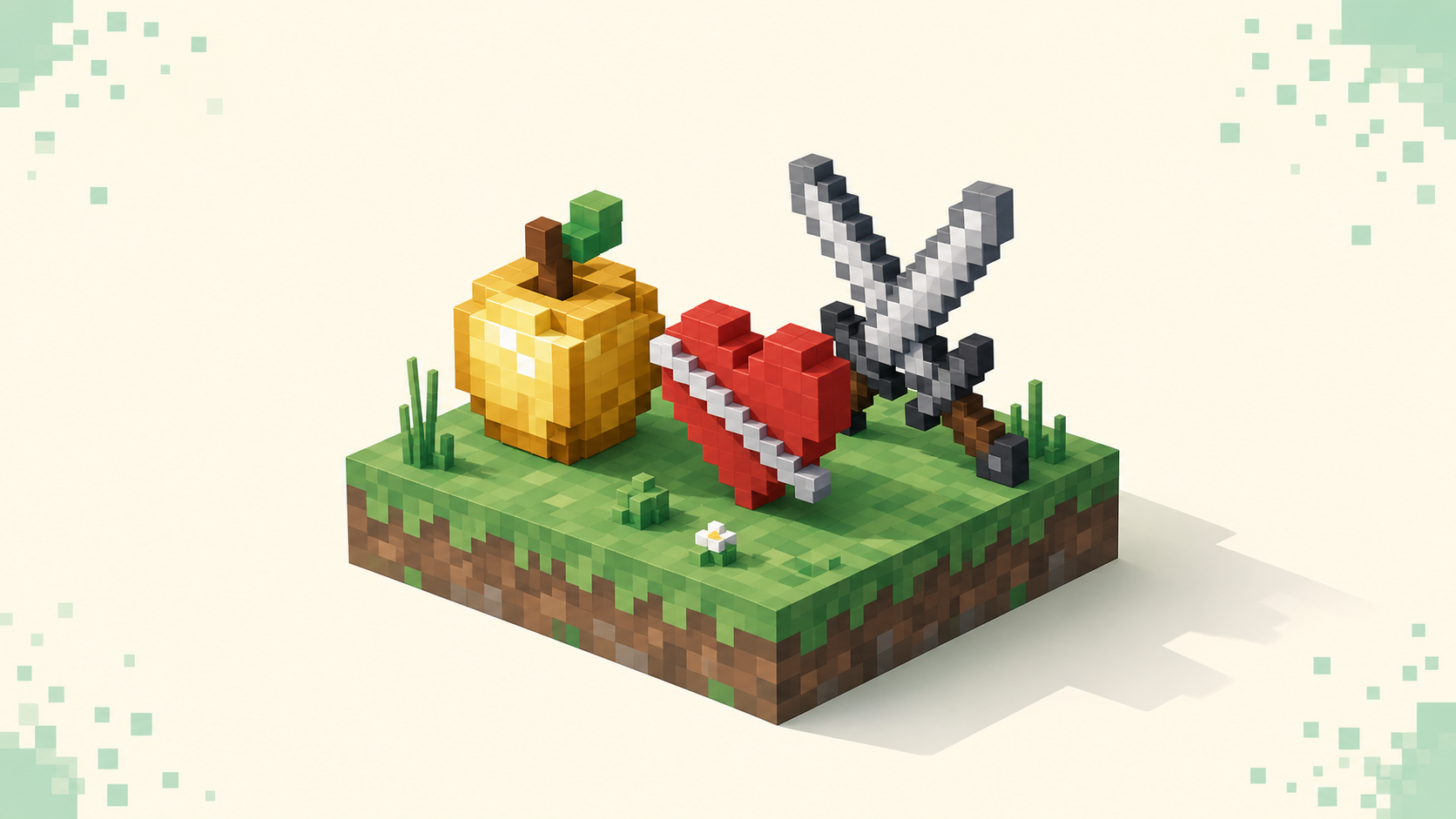
Ultra Hardcore turns off natural health regeneration. In normal survival your hearts refill on their own once your hunger bar is high enough; in UHC that's switched off, so the only way back to full health is a golden apple, a regeneration or healing potion, or whatever healing items the server allows. A fight you'd shrug off in survival can end your run here, because there's no walking it off afterward.
The format is match-based rather than a 24/7 world. Everyone spawns scattered across a fresh map, there's a grace period at the start where PvP is off and you're meant to gather gear, and a world border slowly shrinks to push players toward each other. Near the end most servers force a meetup at the center so the match can't drag on forever. Last player or team standing takes it. That structure is why population works differently here than on a survival server — you don't need a constant crowd, you need enough people online when a game is scheduled to actually fill it.
What makes a UHC server worth joining
A handful of signals tell you whether a server runs real games or just looks like it does.
- A population that fills matches. Because UHC is scheduled rather than drop-in, the number you care about is how many people show up when a game starts, not the raw count at 3 a.m. The monthly vote total on each PvP listing is a good proxy, since votes mean players keep coming back for the games.
- Matches that run on a real schedule. The best UHC communities post game times — a daily slot, weekend events, or an automated queue that fires once enough players join. If you can't find out when the next match is without joining and waiting around, that's a server you'll bounce off fast.
- Anti-cheat that works. This one matters more in UHC than almost anywhere. With no natural regen, a player running a regeneration hack or kill aura doesn't just win a fight, they break the entire premise. A server that catches obvious cheaters is the difference between a fair bracket and a waste of an hour.
- Uptime and low lag. UHC is a PvP test underneath the survival shell, and rubber-banding during a meetup loses you the game outright. A server that's down half the week will cut your matches short, so join once and move around to feel the responsiveness before you commit to a 40-minute match.
- Ping you can live with. A server hosted near you keeps hits registering when they should. The country filter narrows the directory to servers in one region — that path is just an example — so you can line up a host closer to you.
Scenarios and formats: know what you want first
UHC servers vary a lot in how a game plays, so it helps to know what you're after before you judge one as good or bad.
The first split is team size. Solo UHC is every player for themselves; team formats are written as To2 (teams of two), To3, and so on, where you queue with friends and the last team alive wins. A server built around solos plays nothing like one centered on To3s, and neither is wrong — just match the listing to how you actually want to play.
The second split is scenarios, the rule tweaks layered on top of base UHC. Cutclean auto-smelts ores and meat as you mine and kill, which speeds up gearing so games get to the fighting faster. Others change loot, terrain, or how the border behaves. A server that rotates scenarios keeps games fresh; one that runs the same vanilla ruleset every time is more predictable, which some players prefer. Read the listing or the server's Discord to see which way it leans before you settle in.
Red flags to avoid
- Games that never fill. A near-empty server with a huge max-player cap is the classic tell — there's a lobby, but no match ever starts. If the live count never moves and the Discord has no recent game announcements, the matches aren't running.
- No anti-cheat, no staff. Unpoliced UHC is the easiest format to ruin with a hack, and one regen cheater poisons every game. If help requests sit unanswered and obvious cheating goes unpunished, the staff have left.
- Lag or low uptime. Frequent downtime means matches get cut off mid-game, and TPS lag turns the meetup into a slideshow. Join during a scheduled game to feel both before you trust a server with a full run.
- A dead Discord. UHC depends on scheduling more than most modes, and the schedule almost always lives off-game. A quiet Discord with no recent match pings usually means a quiet server.
Using the live rankings to pick
The PvP rankings are ordered by votes earned during the current calendar month, and the count resets when the month flips, so the top entries are the communities running games right now rather than whatever was popular years ago. That's exactly what UHC needs, because a format that depends on filling matches is only as good as its current activity.
Pull a shortlist of two or three near the top, then check each one's schedule and join a game before you decide. Most players try a few before one sticks. If the matches you want aren't running often enough, a survival server scratches a related itch with more on-demand play, and you can compare both ranked lists the same way. And since UHC comes down to combat under pressure, it's worth sharpening your aim where the stakes are low first — the rundown on PvP practice servers for 1v1s covers where to warm up. When you want the widest view, the full server list and the homepage rankings are always current.
FAQ
How do I actually get into a UHC match once I connect?
Most servers drop you into a lobby or hub, and you join the next game through a sign, an NPC, or a queue that fires automatically once enough players are in it. Scheduled servers post start times in their Discord or on a board at spawn, so if nothing's happening when you log in, check there for the next slot rather than assuming the server's dead. Filling a solo bracket usually needs a fair few players, which is why population and a posted schedule matter so much.
Is UHC the same as Minecraft's built-in Hardcore mode?
No. Hardcore is a single-world difficulty setting — locked to hard, one life, and the world's done when you die. UHC is a multiplayer match format defined by switching off natural health regeneration, with a grace period, a shrinking border, and a winner per game. You can lose a UHC match and just queue the next one; the run ends, not your access to the server.
How should I spend the grace period before PvP opens?
Gear up fast and quietly, because once PvP is on you can't heal the easy way. Mine straight down for iron and diamond, get armor and a decent weapon, and stock golden apples — they're crafted from an apple ringed with gold ingots, so prioritize gold while you're underground. Keep an eye on the world border, too: it shrinks as the match goes, so don't build your setup somewhere that's about to be outside the playable area when the border closes in.
What version do I need, and why won't it connect?
Match your client to the version the listing shows; client and server have to share the same protocol to connect at all. If you get "Outdated client!" your side is behind and you need to switch your launcher to the version the server runs. If you see "Outdated server!" — usually right after you've updated — your client jumped ahead of the server, and you'll need to drop back down. UHC is almost always Java Edition on the default port 25565, and a version mismatch isn't something you can patch from your end: multi-version bridging is the server owner's call, not yours.