Best Hardcore Factions (HCF) Servers for Competitive Raiding
How to pick a hardcore Factions (HCF) server for raiding: weigh deathbans, DTR, anti-cheat, tick stability, and scheduled map seasons, then the live rankings.
What separates a hardcore-Factions server (HCF) from regular Factions is the stakes. Dying bans you off the server for a timer, your claim becomes raidable once your faction has taken enough deaths, and the whole map wipes on a season schedule, so the right way to pick an HCF server is on how well it holds up under that pressure, not on whatever it lists on the front page. I'm not going to name servers here, because the competitive scene turns over every season and a list of names would be wrong by the next map. The live Factions rankings already show which HCF communities are active this month, and the rest of it comes down to four things worth checking before you commit: uptime during peak raids, anti-cheat that actually works, tick stability when fights get big, and a real season cadence.
What makes HCF different from regular Factions
The defining rule is the deathban. When you die in HCF — and it counts every kind of death, another player, a mob, lava, a bad fall, the void — you're locked off the server for a set timer, usually an hour or more on default configs. Regular Factions just respawns you and you run back. That one change reshapes how you play, the same way permadeath is the first rule you read on a hardcore survival server: the death rule decides everything else.
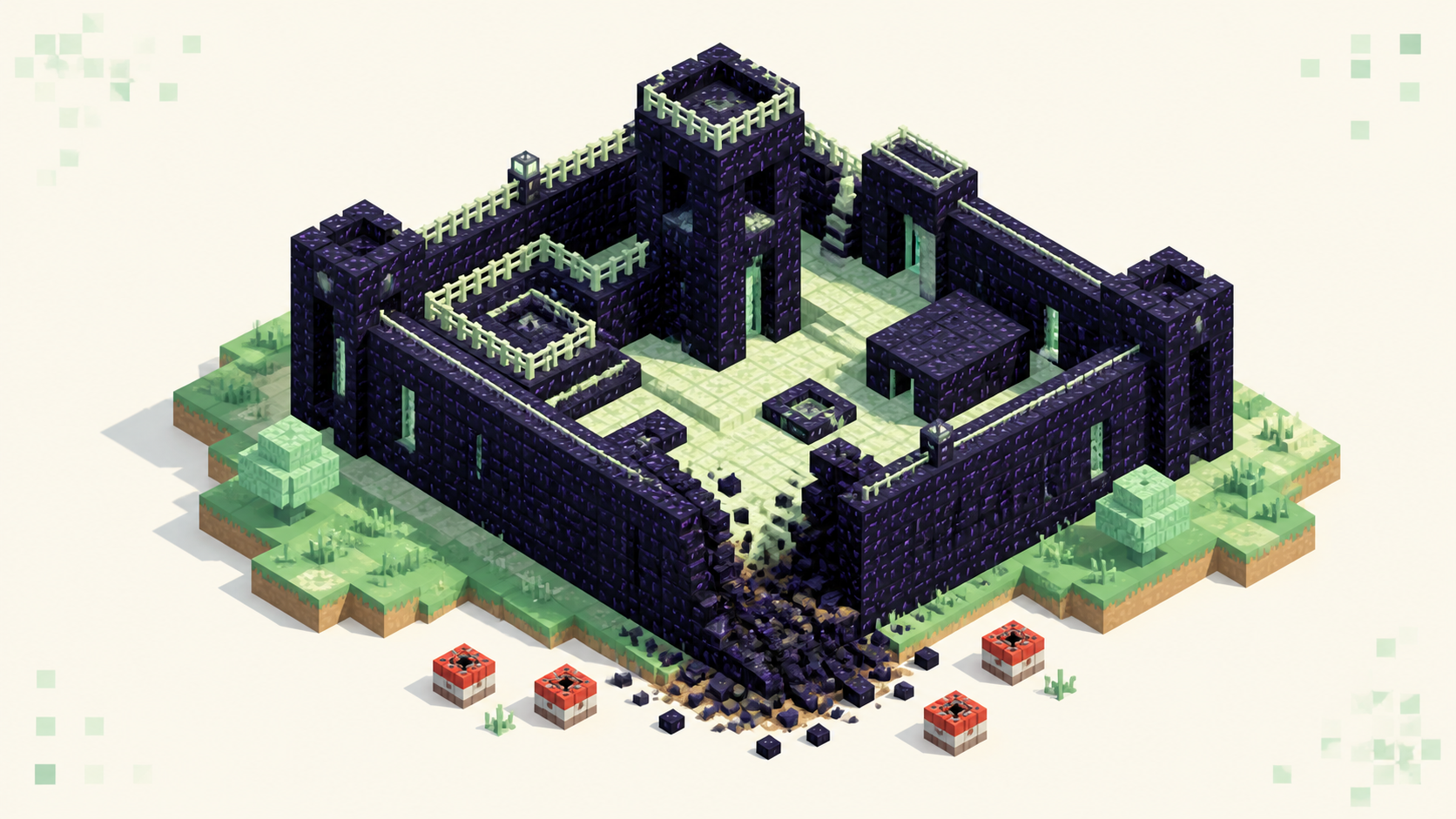
Sitting under that is DTR, short for Deaths Till Raidable. It's a faction-wide counter, and its ceiling scales with how many members you have. Every member death knocks it down, about a point each on most configs, and your land stays protected until the counter hits zero or goes negative. Once it does, your base is open: enemies can break blocks inside your claim and empty your chests. After a death DTR freezes for a cooldown and then climbs back slowly, so a raid is really a race. Attackers try to drop enough of your members in a tight window to force you negative before the counter recovers.
That's the part that makes HCF raiding different from the static claims in regular Factions. A base doesn't get cracked because someone found a hole in the wall; it opens because the owners got pushed negative, and then attackers pearl in, wall themselves up, and start digging for the loot. It's raiding the server sanctions through a mechanic, which is a different thing from plain griefing, and it's worth knowing how servers draw that line.
Combat is the other half of the identity. Classic HCF runs on legacy 1.7/1.8 PvP with no attack-cooldown, so clicking and combos matter the way they used to, and a lot of servers either run an old version outright or use plugins to emulate it. Add enderpearl cooldowns and a combat-tag timer that won't let you log out mid-fight, and you get the tense, committed fights the mode is known for. Many servers layer a class system on top — Diamond, Archer, Bard, Rogue — so a faction in a war has real roles instead of a pile of identical players.
Because this is Factions at its sweatiest, it helps to know what you're choosing against. If you want something calmer and more community-driven, Towny versus Factions for large communities lays out the gentler side, and if you're going in alone, Factions for solo players is honest about how rough that can be.
How a map season actually plays out
A map opens with SOTW — Start of The World — a protection window, usually around 30 minutes, where PvP and raiding are switched off. Everyone gathers, builds, and digs in on equal footing, and it's the one moment a new player gets a clean start, so it's the time you want to join.
After that the map runs live. DTR warfare is the constant, and on top of it sit scheduled events: KOTH, King of the Hill, where factions fight to hold a zone, plus conquest or citadel points that work the same way — contested ground that pays out in-game loot and standing. This is where a season is won or lost over a few weeks.
It ends with EOTW, End of The World. Protections come off for a final, messy push that settles the season, and then the map wipes and everyone resets to nothing. That cadence is the whole point, so favor a server that actually runs SOTW and EOTW on schedule, and skip the map that never wipes — once a couple of entrenched factions own it end to end, there's no real foothold left for you.
How to evaluate an HCF server
Start with uptime during peak raids. Raids cluster at busy hours, and a crash or an unscheduled restart in the middle of one hands defenders a free escape or robs raiders of a win they'd earned. Read the uptime figure on each listing and lean toward servers that hold steady when it's busiest, not just the number they manage on a quiet afternoon.
Then anti-cheat. HCF is about as cheat-prone as PvP gets, and that means killaura, reach, autoclicker, and ghost-client cheats decide fights outright, so an actively maintained anti-cheat is close to a dealbreaker. It's worth knowing what to look for in a server's anti-cheat before you trust a community with a month of your time.
Tick stability matters just as much once fights get big. A 30-on-30 faction war, TNT going off, an entity-dense base — all of it drags server performance down, and low TPS shows up as rubberbanding, hits that don't land, and raids that desync. Favor hosts that hold a steady tick under that load; if you're fuzzy on the number, what TPS and MSPT mean is the short version.
After that, check the season schedule for real. A stated reset cadence, an SOTW window that's actually honored, announced EOTW events — those are the signs of a healthy cycle. Vague answers or a map that never wipes are a warning.
Population and moderation are the quieter checks. You want a server that's busy during your timezone, with no single alliance owning the whole map, and staff who deal with insiding, spawn-camping, and cheating instead of waving it through. Judge that from live player counts and this month's votes rather than front-page hype.
And don't skip ping. HCF combat is reaction timing, and high latency loses you every exchange, so narrow the directory with the country filter — /servers/country/us is just the example path — and aim for the range covered in what counts as good ping.
Red flags to skip before you commit a map
A few things should make you close the tab. The first is cheating you can see, or a server that doesn't mention anti-cheat at all, because on HCF an unpunished hacker doesn't just annoy you, they end your run and take your faction's map with them. The next is TPS lag in a small skirmish, since if a quick fight already stutters, a real war will be unplayable. Crashes or thin uptime at peak hours belong on the list too, as downtime in the middle of a timed raid is the worst failure this format has. So does a stale map that's never reset and sits under one mega-alliance — with no fresh season to enter, new factions just show up as cannon fodder. Watch for a hollow player count as well: a giant max cap next to a near-zero current count usually means a server that was big a few seasons back, and a month of votes tells you more than one snapshot. And ping you can feel, because a combat-first mode rewards a local connection and nothing makes up for the lag.
Using the live rankings to pick your HCF server
The Factions rankings are ordered by votes earned in the current calendar month, and the count resets when the month flips, so the names near the top are communities active right now — which is exactly what a season-based mode needs. If you want the reasoning behind that ordering, how the rankings work covers why current votes beat stale all-time totals. It's worth cross-referencing the PvP listings as well, since HCF is a combat test underneath all the faction mechanics, then pulling a shortlist of two or three from near the top.
Before you commit a map, open each server's page and read its actual ruleset — deathban length, how DTR is configured, the season and reset schedule, and which combat version it runs. Match your client to the supported version on the listing so you don't hit an outdated-server error; version paths here use a dot, like /servers/version/26.2, and the hyphenated form just 404s. Most HCF communities are Java-side on the default port 25565, which fits the old-PvP roots. When you want the wider view, the full server list and the homepage rankings are always current.
FAQ
How long does an HCF deathban last, and can you get out of one early?
Most servers set the timer in config, and an hour is the common default, though plenty scale it longer for deaths during EOTW or for higher-ranked players. You can't appeal it, skip it, or somehow burn it down faster — while the ban is running you're simply off the server until it clears. The one thing that touches it is an in-game lives or revive item, earned through play on servers that offer one, used on yourself or passed to a faction mate to pull them back in early. Short of that, the move is to plan around the timer and not take a fight you can't win when your faction can't afford to lose a defender for the next hour.
Does DTR work differently for a solo player than for a big faction?
Yes, and it's the main reason going solo in HCF is rough. Your faction's DTR ceiling scales with member count, so a one-person faction sits near the floor, often barely above a single point, which means one death can drop you to raidable almost on the spot, with no teammates to soak the loss. A large faction carries a much higher ceiling, absorbs several deaths before the counter nears zero, and can rotate who pushes out so no single death is decisive. You're also the only one regenerating that counter when you play alone, and regen is slow, so even a short offline window can leave your base exposed. If you're set on flying solo, a tighter map and a well-hidden base away from spawn do more for you than raw numbers ever will.
Can you play HCF on Bedrock, or is it Java only?
It's almost entirely Java. The format is built on legacy 1.7/1.8 combat and a deep plugin stack — DTR, classes, KOTH, deathban handling — that lives on the Java server software these communities run, so that's where the active maps are. Bedrock has Factions-style servers, but true HCF with the full ruleset is rare there and usually a loose imitation. If you're on console or mobile and want this exact mode, you're effectively choosing a Java setup on the default port 25565, and it's worth confirming the supported version on each listing before you build a season around it.