Best Towny Servers for Building a Nation With Friends
How to pick a Towny server where your group can found a town, grow it into a nation, and last: claim mechanics, alliances, economy, population, and ping.
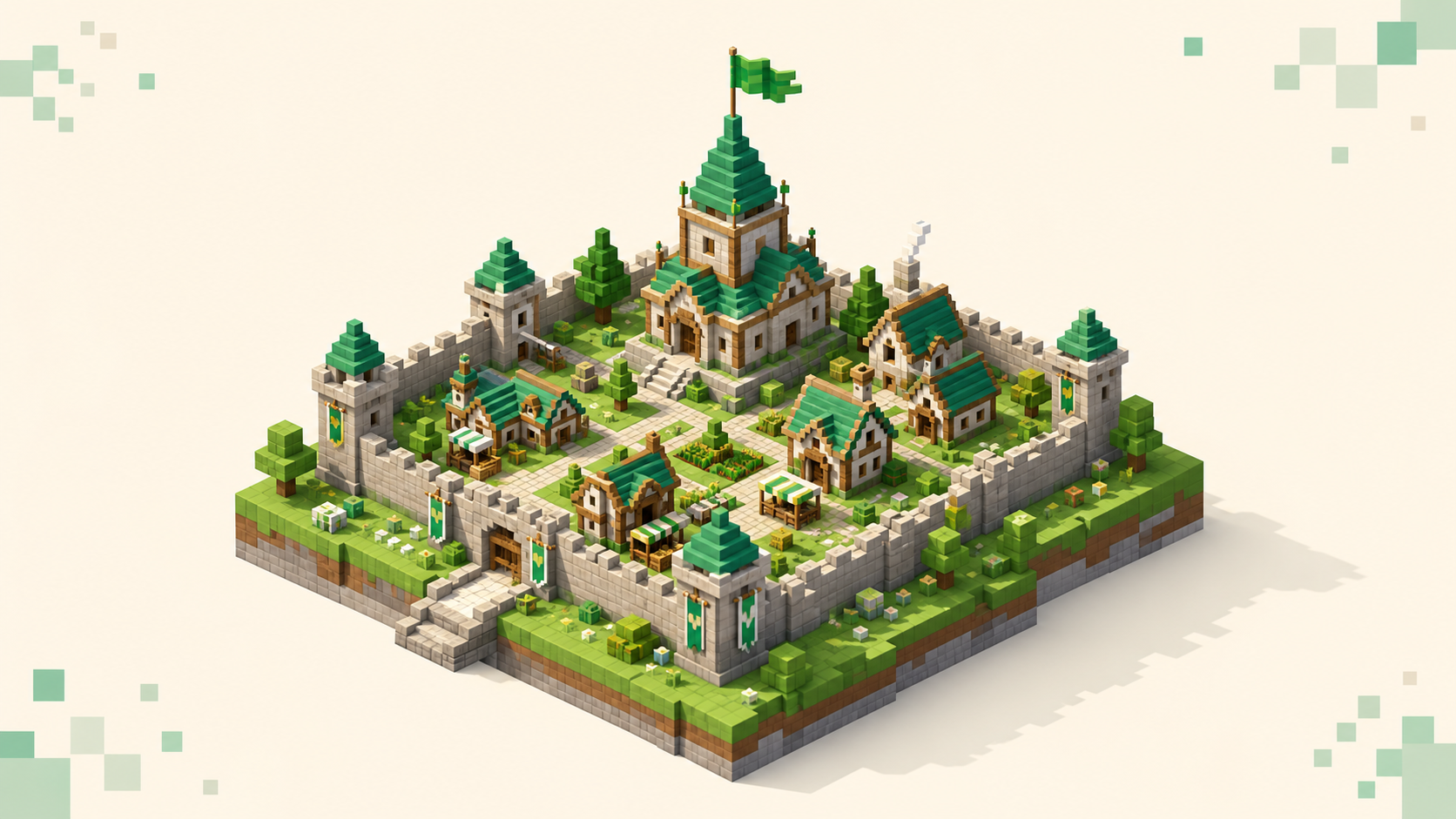
You and a few friends want to plant one town, recruit a handful of residents, and snowball it into a nation that actually holds territory and shows up on the map. That goal is completely doable, but whether it's a fun project or a grind that collapses on day three has almost nothing to do with Towny the plugin and almost everything to do with how a given server has configured it. Towny is the same plugin everywhere; the config — claim costs, upkeep rates, nation thresholds, war rules — is what decides if your nation dream is realistic. So this is a guide to reading those configs and judging a server before you move your friends onto it, not a ranked list of named servers. The live picks that update every month are at the Towny rankings, which is where you actually go shopping. One factual baseline before any of that: you need to own Minecraft to join, and the large majority of Towny servers run on Java (default port 25565).
How Towny actually works, so you know what to judge
If you come from Factions, the vocabulary is close but the rules underneath are different, so it's worth a quick primer. A town is built from claimed townblocks — grid squares, 16x16 like a chunk — that you annex out of the wilderness. Claiming a block makes that land follow the town's permissions instead of the open-world free-for-all, which is how you lock out griefers.
Inside a town, land is split into plots. A plot is either an unowned town plot or a resident plot, and the owner or mayor sets per-plot permissions for build, destroy, switch, and item use. That granularity is the whole point of Towny: you decide exactly who can touch what, lot by lot.
Leadership is simple. Every town has a mayor. A nation has a king, who is just the mayor of the capital town. Both can appoint assistants and custom ranks to spread the admin load, which matters once your group is past three people and somebody has to handle claims while somebody else handles diplomacy. A nation itself is a collection of towns under one capital, with its own nation bank, and it can tax its member towns. That structure — towns under a capital, money flowing up — is the thing you're building toward. If you want the wider gamemode context before you commit, the server types explainer lays out where Towny sits next to the rest.
Claim and plot mechanics: how a town actually grows
The first thing to judge is how a town grows. By default each resident adds claim capacity — commonly around 10 claim blocks per resident — and towns start with a small allotment on top of that. So population and territory are tied together, and a five-person town can claim a lot more than a solo one. Servers tweak these numbers heavily, so don't trust the default; check the config or run /towny prices in-game to see the real cost of land before you plan anything.
Outpost claims are how a nation actually spreads across a map instead of sitting as one blob. /t claim outpost lets you grab non-adjacent land out in the wilderness, so you can stake a mining town here and a port there. Confirm outposts are enabled and find the resident threshold they're gated behind, because some servers lock them until your town is a decent size.
Then look at claim cost against per-block upkeep. More claimed plots means more daily upkeep, every day, so a server that lets you over-claim cheaply is handing a young town a slow way to go bankrupt. Your available claims can be raised three ways — a resident bonus as people join, a town bonus you buy, and a nation bonus once you've incorporated — but every block you take is a block you then pay to keep. The practical test before you commit your friends: how big can a five-person town realistically get in its first week, and does the server use a world border or claim spacing that would stop you from ever bordering a neighbor? Neighbors are the whole point of a nation, so a layout that isolates every town is a red flag.
How nations and alliances work here
Founding a nation is gated, and the gate decides how fast a friend group can incorporate. It typically takes a minimum resident count plus a sum sitting in the town bank — one common config is five residents and a five-figure balance — but the exact numbers are server-config dependent, so check before you build your roster around a guess.
Once you have a nation, diplomacy runs on a simple model. Nations default to neutral and can be set to ally or enemy. Allies get friendly-fire protection, can help build on ally-permitted plots, and can join each other's wars, which is how a small nation buys safety by treaty instead of by force. Enemies are declared explicitly, with a command like /n enemy add, so nobody stumbles into a war by accident.
War rules are where the politics actually live, and they vary a lot by server because Towny's combat is bolted on by addons — Event War, Flag War, and Siege War are the common ones, each with its own feel. Check which one the server runs and whether war is event-scheduled or always-on, because that single setting changes how risky nation-building is — always-on war means your capital can be attacked the moment you raise a flag. Many configs run conquest on points: towns hold points per resident and per plot, lose them when residents are killed by enemies or when an enemy stands on the homeblock, and can be conquered once they hit zero. The specifics are configurable, so read the server's war page. Know those rules before you commit to a capital somebody can attack.
Does the economy actually support upkeep?
Upkeep is the thing that quietly kills towns, so frame it correctly. Town and nation upkeep is in-game currency the server auto-withdraws from the town or nation bank at the start of each Towny day, and it's there to keep the place alive. Miss a payment and the town falls — claims released back to wilderness, weeks of work gone. Nation upkeep scales with the number of towns and plots, so a sprawling nation costs more to run every single day.
Your group also has to plan around tax flow. A nation sets a daily tax on its member towns, and that tax is collected before nation upkeep, on top of each town's own upkeep. The math is unforgiving: a nation that grows faster than its income dies. So the real question about any server's economy is whether its money sources — jobs, player shops, quests, sell mechanics — can realistically out-earn upkeep for a casual group that logs on a few evenings a week, not just for people who play it like a job. If a server's economy depth is your make-or-break, browse the economy rankings and look for Towny servers that also carry the economy tag. Thin economies turn a nation into a treadmill where you're grinding just to stay even.
Population balance: neighbors, not a hegemon
There's a Goldilocks problem here. The one you'll hit more often is the overcrowded server, where there's plenty of action but no unclaimed wilderness left to found in, so your group never gets a foothold. The opposite case is the near-dead server, which hands you all the land you want but no rival nations to ally with, trade with, or fight, and that gets boring fast. What you're after sits between the two.
The specific thing to watch for is a single dominant nation that already controls the map and most of the staff's attention. Joining late under a hegemon usually means vassalage or constant raids with no real path to independence, which is the opposite of what your group signed up for. A rough proxy is the monthly vote count: a server that sits steadily mid-pack over time usually has a living-but-not-saturated population, where there's room to found but also rivals to deal with. The rankings explainer covers what the monthly reset and vote totals do and don't tell you, so you read those numbers correctly. Beyond the numbers, do the concrete check — log in at your usual play hours and read the live map (dynmap or BlueMap if the server runs one) for the ratio of claimed land to open wilderness and the number of distinct nations, before you move anyone.
Staff, disputes, uptime, and ping
Disputes will happen sooner or later — griefing right outside your claims, a mayor coup, an ally who betrays you mid-war, or someone abusing a war rule. So ask how staff handle ownership disputes and whether the server runs rollback and logging — CoreProtect-style — because without it a single betrayal can erase weeks of building with no way to undo it. Look for clear, published war and claim rules and visibly active moderation. A server with vague rules turns every nation conflict into an unmoderated mess that your group has to absorb.
Uptime is non-negotiable for this gamemode, because a Towny nation is a long-term investment of real hours. Frequent outages or surprise wipes are disqualifying, and you should find the server's stated reset or season policy before you commit months of building to it. Ping matters less than it would on a pure PvP server, since Towny is mostly not twitch-sensitive — but war and occupation do come down to combat, so pick a server in a region near your group. You can cross-reference the country filters to narrow by location, then just test the in-game latency yourself.
How to shortlist with the live rankings
So the buyer's scorecard, pulled together: a claim and upkeep config a small group can actually sustain, an economy that out-earns that upkeep, working alliance and war rules, and a balanced population with real neighbors — then the basics any long-term server needs, responsive staff with rollback logging, solid uptime, and acceptable ping. That's the list to carry into the Towny rankings, which refresh monthly and are the real shortlist source. Remember the homepage rankings reset each calendar month, so whoever sits at the top reflects who's active right now, not who was popular a year ago.
Before you relocate the whole friend group, try the top two or three candidates with a throwaway solo town for a few days each. Test the upkeep math against the actual economy and see how fast staff respond to a real ticket — that tells you more than any server description will. When the config and the community line up, founding a town and growing it into a nation with friends is about the most rewarding way there is to play Minecraft over the long haul.
FAQ
Can we merge two existing towns into one nation instead of starting fresh?
Yes, and it's how most player nations actually form. One town founds the nation and becomes the capital, then invites the other town in with a command like /n add, and the second town's mayor accepts. Both towns keep their own claims, banks, and residents; they just now share a nation bank, ally list, and war status. The merging town owes the nation's daily tax from then on, so before you join up, make sure the second town's economy can cover its own upkeep plus that tax, or the whole nation starts bleeding money.
What happens to our town if everyone goes inactive for a season?
Two separate clocks can end you. The first is upkeep: if nobody tops up the town bank, daily upkeep drains it, and the day it hits zero with a bill due, the town falls and its claims go back to wilderness. The second is the server's own inactivity policy — many Towny servers delete towns whose mayor hasn't logged in for a set number of days, regardless of bank balance. Find that mayor-inactivity number before a break and, if you can, hand the mayor role to whoever's most likely to log in. A season break is survivable, but only if someone's watching the bank and the login clock.
How do alliances and wars work between nations in Towny?
Nations start neutral and can be set to ally or enemy. Allies are protected from friendly fire, can build on ally-permitted plots, and can join each other's wars, which is how a friend group's nation gains protection by treaty. The combat itself comes from a war addon — Event War, Flag War, or Siege War — and which one is running changes everything about how a war plays out, so check the server's war page rather than assuming. Conquest commonly runs on a point system where killing enemy residents or holding their homeblock drains points until a town can be captured, but the exact rules, and whether war is always-on or event-scheduled, depend entirely on the config.
Is a paid plugin like Dynmap required to scout a server before joining?
No. Dynmap and BlueMap are live web maps the server operator chooses to run or not, and you read them for free in a browser if they exist — there's nothing for you to install or buy. If a server doesn't publish a live map, you fall back to logging in at your usual hours and traveling a bit to eyeball how much land is claimed versus open. The map just makes that scouting faster; it isn't a gate on joining.